Thursday, August 9, 2012
Closure - Shelley's Thoughts on August 9, 2012
The privilege to participate in the Brazil Fellowship offered an experience that was powerful in ways that cannot be put into words. I have many rich feelings in my heart, many thoughts and ideas in my mind and many sounds in my head. I have absorbed this experience in every cell and formed bonds that will go well beyond the visit itself. I am sure that what I have gained will come forth from me when the time is right, when the information is needed, when the learnings can be used in ways that benefit the communities that I serve. Absorb, process, use… re-tool, re-absorb, re-process and use again and again. That is how I think of learning. The sites, visits, lessons, people, they are all inside me just waiting for to be turned into something beautiful that will benefit others. So I need to assure myself that putting everything down on paper is not important. Lessons learned go in and out of my head and I keep thinking I need to fit them all into this blog post in a cohesive and meaningful way. The post would then never get written. It is just too much. I have to trust in the process of integration and release.
The language barrier was apparent on several occasions and it was almost embarrassing how little time I had taken to learn at least a small part of the language of the country I visited. This limited my ability to gain the fuller picture I might have wanted as I visited the many social service agencies that graciously agreed to provide us with an overview of what Curitiba (and, in some instances, Parana) has to offer its citizens. It prevented me from digging into issues in a way that would have brought more clarity to what I was hearing.
The whirlwind tour of many agencies provided a 1000’ view of what Curitiba offers its “at risk” citizens and, I believe, provided a view of some of the best that Curitiba has to offer. Time constraints and, again, the language barrier made it difficult to determine exactly what was meant by “at risk” in various situations and what Curitiba offers citizens who are not “at risk”. Still, the 1000’ view contained numerous lessons that can be integrated into my life and my work.
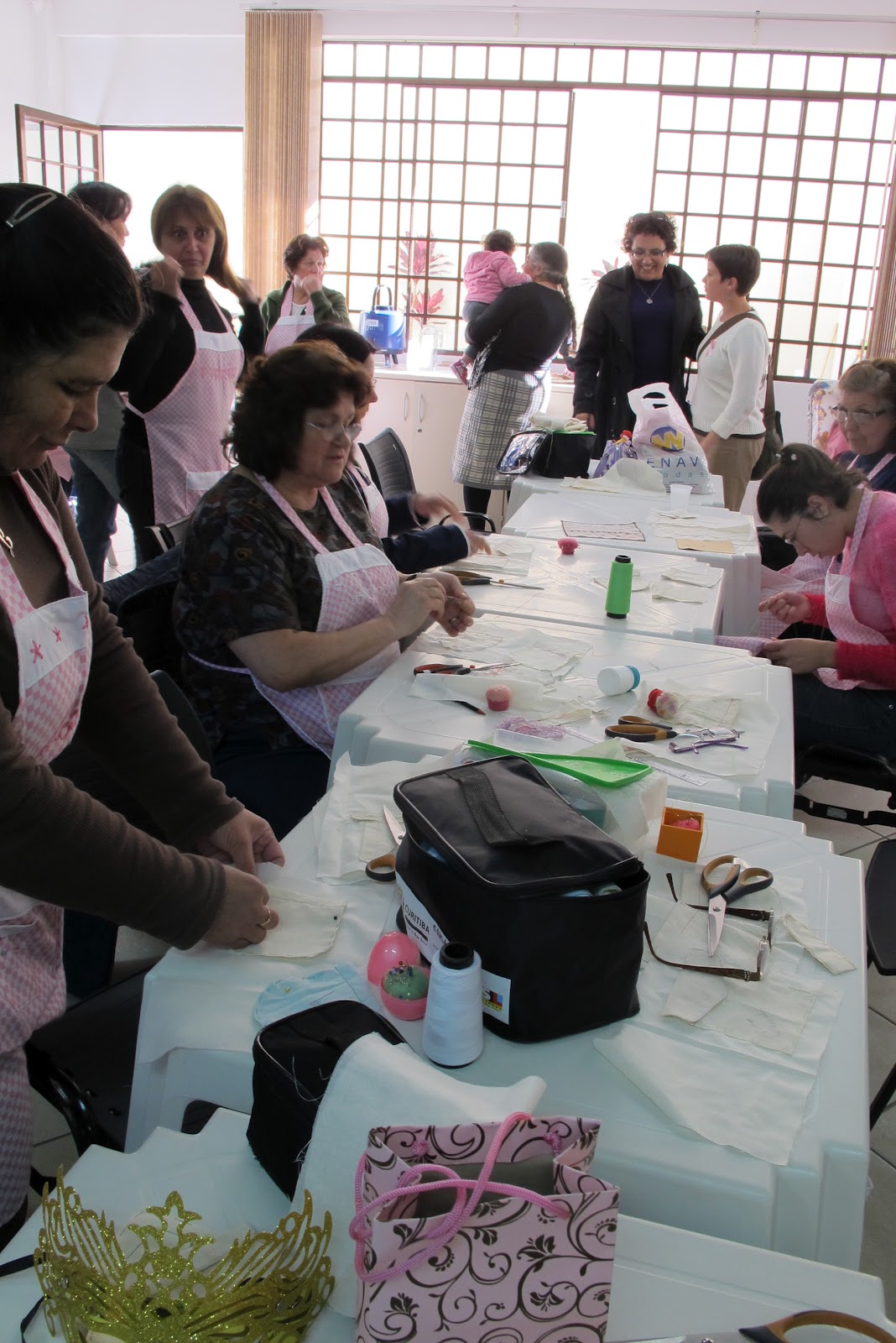
During the two weeks I was in Brazil, I entered into what felt like a private world of illness, homelessness and poverty. And in this world I saw resilience, ingenuity, hope, love, caring and pride. The concepts I was introduced to through visits to the Legislative Assembly and the office of the Secretary of Health of Parana provided an overarching understanding of the concern and care that the government has for its citizens and the programs and the support services that have been put in place. Visits to district centers and their “mini city halls” provided a view of the next level of government support, a more local mirror of the city and national programs. And the visits to health clinics, community organizations where women gather to create crafts to sell, after-school programs where juveniles gather to gain skills that will keep them off the streets and assist them in building a better life for themselves and family centers where day care is provided for families and families can come together to support themselves in local and meaningful ways completed a picture of top-down implementation of a vision of support and caring.
I experienced a very close up and personal view of the depth of personal relationships among Curitibans. I visited and dined with several families, met caregivers, spoke at length to those fighting for the rights of the disadvantaged and talked to those who live their lives so as to just get by day-by-day. Here I was in the trenches of life in Curitiba and had a courtside view of what that life is like for people of various social strata in the city.
In my blog postings, I wrote about some of the most impactful experiences I witnessed or heard about. Julia’s music therapy project left me with a deeper appreciation for music as a means of self expression, joy, bonding and emotional release. Valeria’s diligence in providing a voice of advocacy for those who cannot advocate for themselves left me in tears. The women of Amigas da Mama left me with an image of the important cocoon of support that can be offered just by having a place where one can go to find people who have walked the same journey. Rosangela’s sharing of her time, life, friends and supporters left me with a deeper understanding of home and family. Through the weeks it became clearer and clearer to me that the system does not work at all without those willing to give of themselves to provide the personal interactions that truly make the system work.
As I wrote before, I was left with this conceptual image: the healthcare and social service systems in Brazil seem to be much like a prism. In the daylight, the prism is beautiful and colorful from all angles. But on a cloudy day, the beauty and colors are not readily available. I will need to use my own recall to remember the beauty. And I will hold onto this image with the memory of the many individuals who are working hard to assist others in navigating a system that is large, overwhelming and maybe easy to get lost in. Those helping others are the living beautiful colorful aspects of the prism and they, in turn, see the beauty and colors in each individual who needs their help. Together they make the system work. They provide the light needed for the prism to beam with beauty even on the cloudiest of days.
I believe that the five American travelers all left behind a positive impression of us, our organizations and our country. Two emails that I have received after arriving home support that belief:
First, Rosangela wrote to me: “I think that you really understood what I tried to give you, my place, my heart, my love……. As you can see, I was able to do a lot, only because I have very good friends by my side and I’ll be forever thankful to all of them. I don’t have lots of money but I’m a very rich person – I have lots of friends around me and they were glad you and the other girls came to see a little bit of what we are.”
Rosangela was referencing my blog post about the meaning of “home”. She had said to us before we left that she felt like she did not do enough for us and that she was sorry that she could not invite us into her house for dinner as Julia and Valeria had. Her house was too small for all of us to fit in. Yet, her (and other’s) pride for their country and their work, and their care for each other, were so evident in what they gave to us and I cannot say enough about how that was reflected in each and every encounter we had with someone whose homeland is Brazil.
Second, Valeria wrote to me: “I renewed my strength to this task continius our hard volunteer work. Thanks especially to you, who brought the identification of our work.”
I think Valeria is referring to the story I told at the night of our presentations. I reflected on the impact that my visit to Amigas da Mama had on me, particularly the moments when the women of Amigas da Mama surrounded a newcomer with love and support, forming a visible bond that brought me to two conclusions:
The first is something I said in my blog. “Sometimes it is the hardest parts of our journey that leave us with the strongest memories of all the warmth and love that we can experience in this life. Companionship such as I saw today cannot be purchased and is worth more than anything money can buy.”
The second is that while it is very important to hold the larger vision of how we would like the world to be, it is often more important to hold the vision of the one individual we are helping in any given moment. We can sometimes forget that important piece in the midst of our competing with other agencies for funding, wanting to be the ones to win the battle, wanting to be the ones who get recognized for providing the solution to a problem and wanting our organization to be the “best”. We all have a function, a role, in this cog we call life. Making sure the role is one that benefits someone in need really is, for me, the higher calling.
This experience validated all that I do to support an organization created to help individuals, families and caregivers navigate through their own cancer journeys, as well as the several other organizations I devote my time to. So did I give Valeria strength or did she give strength to me? It clearly went both ways. Isn’t this what this Brazil Fellowship program is all about?

Tuesday, July 31, 2012
Amy's Perspective: So Much Left To Say
 |
| Downtown Curitiba, near our hotel |
The entirety of the last two weeks have finally begun to settle into my mind, and heart. I approached this experience as I do most in life: one part optimism and excitement, two parts flexibility, 1/2 part gulp for the inevitable. Life unfolds as it wishes, taking you with it as it goes. This experience taught me an incredible amount in a very short time (2 weeks!): You must roll with the punches, but never forget how to punch back.
 |
| The wonderful women from Humsol |
 |
| Our last group dinner in Brazil, missing Julia and Rosangela |
Our three Curitiba hostesses were truly dedicated to this as a way to show their city, their country, and themselves. They opened their lives to us so that we could not only see but feel the true strength of their dedication to women's health and the work they do daily.
 |
| Julia carries us through the song :) |
 |
| Left to right: Valéria, Shelley, me, and Judy in the State Assembly's President's office. |
 |
| Rosangela, far right, and her sister, far left, with other Humsol members celebrate their 3rd Anniversary |
Rosangela has more life and energy in her pinkie finger than I think I will ever have in my entire body. She exudes confidence and joy from every strand of her curly hair. She lives life to it's fullest, and with her organization Humsol she has met her match! These people know how to dance and celebrate. We were lucky enough to be in Curitiba for their 3rd Anniversary party. There was so much food, dancing, and laughing that I could not help but think this group knows a lot about celebrating the little and big victories in life. Rosangela, Tonia, and all of the wonderful people from this NGO love life. They want to celebrate every minute we are blessed with. They are dedicated to raising funds, through their breakfast and dance gatherings, for women needing surgery from cancer. Rosangela is an incredible woman and I am excited to hear about where the agency goes from here.
Saturday, July 28, 2012
On Leaving Curitiba - Shelley's Reflections on July 28
Curitiba is a big city, very big. I think there are close to 2 million people living there. One could easily get lost in the hustle and bustle of cars and busses, tall buildings, sprawling neighborhoods and people everywhere. And it might be very difficult to find the way through the enormity of a social system in a city of this size. Over the past two weeks, I entered into what felt like a private world of illness, homelessness and poverty. And in this world I saw resilience, ingenuity, hope, love, caring and pride.


Curitiba is divided into 9 districts, each with its own central city hall that allows citizens of the district ease of access to social services. Within the city, the bus system creates a web of low cost access to each district and, within each district, citizens can get to local health and social services. We had the privilege of visiting many of the health and social services within several districts, including Cajaru, a district of about 100,000 citizens. We experienced a broad range of services from local health clinics, to community organizations where women gather to create crafts to sell, to after school programs where juveniles gather to gain skills that will keep them off the streets and assist them in building a better life for themselves. The concept seems so beautiful and sounds so right, yet I believe that are complexities below the surface that we could not understand given our language barrier and limited time. And I know that there are many individuals helping others in the midst of these complexities.




The True Meaning of "Home" - Shelley's Gratitude for Rosangela
July 27


To say I am not ready to leave Curitiba would be an understatement. There are so many things to see here, so much to learn and, in a way, it feels like we have just begun to scratch the surface. Isn’t it that way when one visits a new country, or even a new state in one’s own country? Yet, in another way, we have seen so much.


Wednesday, July 25, 2012
Brazil from Amy's Perspective

Our time in Brazil is quickly coming to an end. It is hard to believe it has been 11 days today since I landed in São Paulo. Too much has happened to recount everything. I would have to spend the last few days entirely blogging in order to give a fair shake to all of the places we have seen and the people we have met. I will focus on the events that are most vibrant in my memory to hopefully allow me to do the most justice to an experience that feels difficult to describe.
One of our partner NGO's, Amigas das Mama's, holds a choral and craft group that is open not only to women with breast cancer, but to women from the community as well. The women were so welcoming and proud to talk with us about the organization that they are involved with. All activities are on a volunteer basis but many of the women I spoke with talked about AAMA as their second family, their home away from home. It was clear from the way they interacted that these women were a family, and now I was a part of it as well. The crafts and singing were an introduction for the women to come together and share. They were the foundation of support for each other as they went through treatment and processed emotionally and physically the changes within their bodies and their relationships with other people.


As women stood before us to sing songs that helped them heal, I could only think how critical these services are as part of our health care system. The cancer treatment was doing it's part to save these women's lives, but so wasn't this organization, this group, these women. To witness the power of this family these women created made me realize that so many times our medical system is short sighted. How well would these women cope with the radiation if they couldn't come weekly to share laughter and songs? How would women who were deserted by husbands or families when they fell ill find strength, or trade tips for dealing with the side effects of treatment?
Finding a way for people to create new families and build a foundation of support for themselves is critical when approaching health care. There is more to healing than medicine. I encourage anyone reading to take a moment to reflect on how all of us are impacted by the support of our families or friends, and where you would be without it. I am grateful to AAMA and these women for welcoming me into their family and bringing me into their lives. You have given me a wonderful gift.
Monday, July 23, 2012
Brazil From Amy's Perspective: Curitiba


Photos by Hugo Lenzi, for De Peito Aberto
I arrived at my next destination, Curitiba, in the state of Parana, on Wednesday along with Shelley and Judy. Our original flight was cancelled, but we were quickly moved to the next available one. As we waited by the gate hoping to hear some announcement that we could understand, I was again brought to bewilderment and admiration for the Brazileiras knowledge and ease with the English language. It is so easy to take for granted the challenge of simple communication. To meet so many women who have not only have mastered basic conversational English, but are able to carry on conversations while transitioning between English and Portuguese is amazing to witness. It gives me a lot of hope that I will master Portuguese some day!
Our welcome at the airport was nothing short of wonderful. Julia, Valéria, Rosangela, and Julia's son greeted us with big hugs and even bigger smiles. Our three hostesses and their families have been incredibly welcoming. They have taken us into their lives, happily spending all day with us showing us their homes, their work, and their passion for the women of Brazil. They play the role of organizer, but also translator, helping us around their city and (quite frankly) putting our hostess skills to shame. :)
 |
Judy and Shelley smile while waiting for the flight from São Paulo to Curitiba |
 |
| Smiles, hugs, and excitement all around. Rosangela's (far right) wonderful personality is captured so perfectly here! |
 |
| Left to right: Shelley, Judy, Mariangela, and me after our music therapy lesson. |
For dinner on Wednesday night, Julia and Rosangela, along with Julia's daughter and a translator who will assist at the conference, took us to this wild pizza joint where they offer slices like pineapple and cheese, white chocolate and strawberry, and banana pizza. We tried almost every option they have, because when will we be able to have banana and chocolate on a pizza in the States? It was a great and tasty introduction to Curitiba.
 |
| Inside the Parana State Legislative Assembly building |
On Thursday morning Valéria took us to the Legislative Assembly of Parana. We had two wonderful legislative staff who gave us a tour, explained the history of Parana and Curitiba, and answered all of our questions without missing a beat. As someone very interested in politics, it was great comparing and contrasting their political system with the States, and learning the ins and outs of another system. It was interesting to see the military police office in the room next to a Catholic chapel next to the Assembly's multiple secretary's offices, and thrilling to have coffee in the President's office even though he was out.
 |
| Legislative President's office. |
 |
| Valéria and one of our wonderful guides enjoying coffee in the President's office. |
Sunday, July 22, 2012
The Big WOW! Shelley on June 20

The day started with a big WOW!! We were welcomed into the office of the Parana Secretary of Health by the Secretary himself, Miguel Caputo. He came in during his vacation time to share with us information about Curitiba’s Mother, a program that provides services to at risk women who are pregnant, throughout their pregnancy and beyond to the child’s age of 2. The program provides resources such as housing, food, medical care and clothing. Since the inception of this program 12 years ago, infant mortality in Curitiba has dropped from 16% to 8.5% and transmission of AIDS from mother to baby has dropped to 0%. The program has started expanding into Parana’s Mother and Brazil’s Mother, an interesting twist on a traditional top down model. Curitiba is leading by example.

At this same meeting, we met Vinicius Budel, an oncologist who was able to answer a broader set of questions regarding health care. He talked about preventative medicine being the base of the health care system, with consultation with physicians as a second tier and hospitals as a third tier. The base of the system includes four programs: children, gynecological, seniors and chronic disease such as diabetes and hypertension. Citizens access the health care system through its base, navigate through the portions of the system they need and always return to base.
One interesting story that Vinicius Budel shared was about an event of eight years ago where Curitiba offered free mammograms on a Saturday. The event was highly publicized and 33,000 women showed up. The following Saturday, free prostate exams were offered. 800 men showed up. This differential is being taken into account this year with the introduction of Blue August. This event, similar to Pink October to raise breast cancer awareness, is designed to raise awareness of prostate cancer.
Another fascinating discussion item:
- health care is a Constitutional right in Brazil (This leads me to the question of how “health care” is defined and who is entitled to publicly supported health care. We were told that 30% of the citizens of Curitiba have private health care.)
- 12% of all state budgets must go toward health care
- 15% of all municipal budgets must go toward health care
- there is no mandated percent of the federal budget toward health care.
We were also told that the “right” to a mammogram for women not “at risk”… how is that defined?… exists for women ages 50 – 70. How many of my friends and acquaintances who have traveled the breast cancer journey would have qualified for a mammogram before the age of 50? Hmmm? This is becoming a discussion item in the U.S. too. Something we have in common with Brazil, I guess.
Toward the end of the meeting, we realized that we, as Americans, had opened the door to a conversation that one of the local women attending with us had hoped to have for some time. As a radiology technician specializing in mammograms, she has been concerned with the division of funding for the public health care system. From what I could tell, she was concerned with the lack of funding for training in the reading of mammograms and said that all the great technology in the world does no good if the individual reading the mammogram cannot determine whether the exam shows indications of breast cancer. It was fascinating to think that she had taken this opportunity to escort us to this meeting in order to get her foot in the door with people in high places. Yet, I think that is exactly what she did.

At the end of the meeting, I presented Miguel Caputo with a token gift that I had purchased at Historic Northampton. A WOW ending to an amazing meeting and another example of the welcome that we are receiving in this gracious city.

Subscribe to:
Posts (Atom)